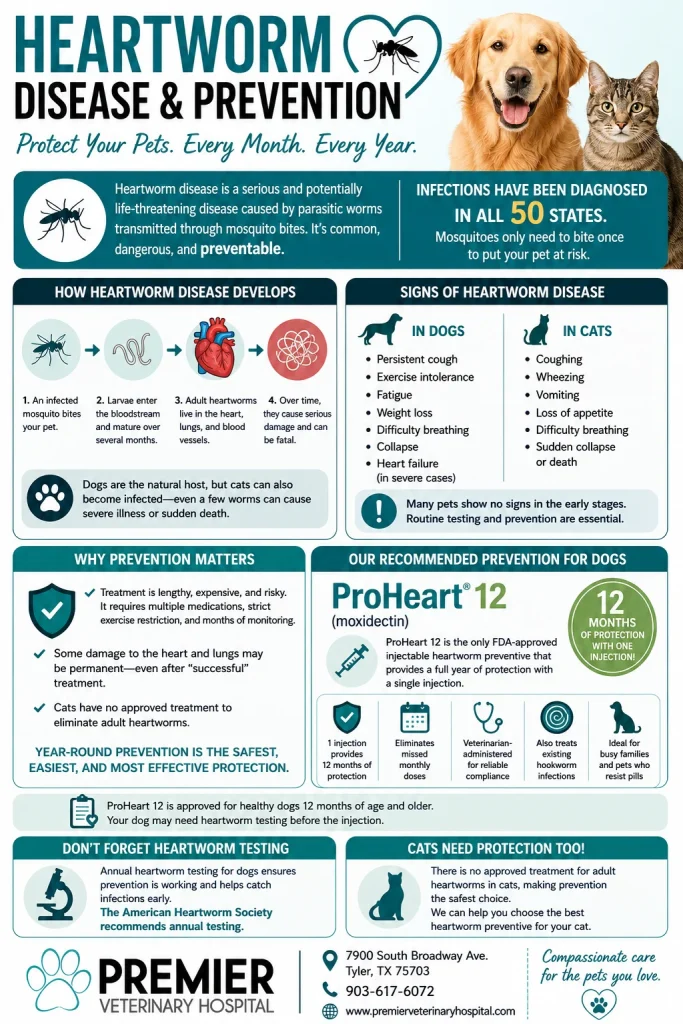
Heartworm disease is one of the most serious—and preventable—parasitic diseases affecting dogs and cats. Transmitted through mosquito bites, heartworms can cause severe damage to the heart, lungs, and blood vessels, leading to chronic illness, heart failure, and even death if left untreated. Unfortunately, heartworms have been diagnosed in all 50 states, including Texas, where our warm climate allows mosquitoes to remain active for much of the year.
What Are Heartworms?
Heartworms (Dirofilaria immitis) are parasitic worms spread by infected mosquitoes. When a mosquito carrying heartworm larvae bites a pet, the larvae enter the bloodstream and mature over several months. Adult heartworms can eventually live within the heart, lungs, and major blood vessels.
Dogs are the natural host for heartworms, meaning the worms can grow, reproduce, and cause significant disease. Cats can also become infected, but even a small number of worms can cause severe respiratory disease or sudden death.
Signs of Heartworm Disease
In Dogs
Early heartworm disease often has no obvious signs. As the disease progresses, symptoms may include:
- Persistent cough
- Exercise intolerance
- Fatigue after activity
- Weight loss
- Difficulty breathing
- Collapse
- Heart failure in severe cases
In Cats
Heartworm disease in cats can be more difficult to diagnose. Signs may include:
- Coughing
- Wheezing
- Vomiting
- Loss of appetite
- Difficulty breathing
- Sudden collapse or death
Because many infected pets appear healthy during the early stages, routine testing and prevention are critical.
Why Prevention Is Better Than Treatment
Treating heartworm disease in dogs is lengthy, expensive, and carries risks. Treatment requires multiple medications, strict exercise restriction, and months of monitoring. Even after successful treatment, some damage to the heart and lungs may be permanent. Cats have no approved treatment to eliminate adult heartworms, making prevention even more important.
The American Heartworm Society recommends year-round heartworm prevention for all dogs and cats, regardless of lifestyle. Indoor pets are still at risk because mosquitoes can easily enter homes.
Annual Heartworm Testing
Even pets on prevention should be tested regularly. The American Heartworm Society recommends annual heartworm testing for dogs to ensure prevention programs are working effectively and to identify infections early.
Our Recommended Heartworm Prevention for Dogs: ProHeart® 12
At Premier Veterinary Hospital, we strongly recommend ProHeart® 12 for eligible dogs.
ProHeart 12 is the only FDA-approved injectable heartworm preventive that provides a full year of protection with a single veterinary-administered injection. Rather than relying on pet owners to remember monthly doses, one injection provides continuous protection for 12 months.
Benefits of ProHeart 12
- One injection provides 12 months of heartworm prevention
- Eliminates missed monthly doses
- Veterinarian-administered for reliable compliance
- Also treats existing hookworm infections at the time of injection
- Provides continuous year-round protection
- Ideal for busy families and pets who resist oral medications
Studies have demonstrated excellent efficacy, with a single dose providing year-long protection against heartworm disease.
Is ProHeart 12 Right for My Dog?
ProHeart 12 is approved for healthy dogs 12 months of age and older. Before receiving the injection, your dog may need heartworm testing depending on age, previous prevention history, and current health status. Our veterinary team can determine whether ProHeart 12 is the best option for your pet.
What About Cats?
While ProHeart 12 is only approved for dogs, cats also require year-round heartworm prevention. Because there is no approved treatment for adult heartworms in cats, prevention is the safest and most effective strategy. We can recommend the best heartworm preventive based on your cat’s lifestyle and health needs.
Protect Your Pet Today
Heartworm disease is serious, but it is also highly preventable. With routine testing and consistent prevention, you can protect your pet from a potentially life-threatening disease.
If your dog is due for heartworm testing or you’d like to learn more about ProHeart 12, contact Premier Veterinary Hospital today. Our team would be happy to discuss the best prevention plan for your pet and help keep them protected all year long.
Premier Veterinary Hospital
7900 South Broadway Ave. Tyler, TX 75703
903-617-6072
Website: premierveterinaryhospital.com