
Stenotic Nares Surgery in Tyler, TX
Bulldogs, Pugs, French Bulldogs, and other flat-faced pets often struggle to breathe through narrow, pinched nostrils. At Premier Veterinary Hospital, our stenotic nares surgery opens the airway so your pet can breathe easier, sleep better, and enjoy a more active, comfortable life.
Request an AppointmentUnderstanding Brachycephalic Breeds
Certain breeds of dogs and cats are prone to difficult, obstructive breathing because of the shape of their head, muzzle, and throat. The most commonly affected dogs are the “brachycephalic” breeds, a term that means “short-headed.” Examples include English Bulldogs, French Bulldogs, Pugs, Pekingese, Shih Tzus, and Boston Terriers. Persian cats share the same flat-faced conformation.
These pets have been bred for very short muzzles and noses, and as a result their throat and breathing passages are frequently undersized or flattened. The combination of airway abnormalities they experience is called brachycephalic airway syndrome, and it can affect everything from exercise and sleep to eating and heat tolerance.
Signs Your Pet May Need Airway Surgery
- Loud breathing, snoring, or snorting, even at rest
- Open-mouth breathing and difficulty catching their breath
- Tiring quickly during walks or play
- Gagging, regurgitation, or difficulty eating
- Restless sleep or sleeping in a sitting position
- Overheating easily in hot, humid East Texas weather
- Blue-tinged gums or tongue, or collapse

Brachycephalic Syndrome
Brachycephalic syndrome refers to the combination of an elongated soft palate, stenotic nares, and everted laryngeal saccules, which are all commonly seen in flat-faced breeds.

Elongated Soft Palate
An elongated soft palate is too long, so its tip protrudes into the airway and interferes with the movement of air into the lungs.

Stenotic Nares
Stenotic nares are malformed nostrils that are narrow or collapse inward when the pet inhales, making it difficult to breathe through the nose.

Everted Laryngeal Saccules
With everted laryngeal saccules, tissue just in front of the vocal cords is pulled into the windpipe and partially obstructs airflow.

Additional Airway Problems
Some dogs with brachycephalic syndrome also have a narrow trachea, collapse of the larynx, or paralysis of the laryngeal cartilages.
Stenotic Nares Surgery at Premier Veterinary Hospital
Stenotic nares surgery, sometimes called rhinoplasty or a nares resection, removes a small wedge of tissue from each nostril to widen the opening and allow air to flow freely through the nose. When indicated, it can be combined with soft palate resection and removal of everted laryngeal saccules to address the full airway obstruction during a single anesthetic event.
Why Early Correction Matters
The constant effort required to pull air through a narrowed airway gradually damages the throat and larynx. Over time this can lead to laryngeal collapse, a serious and often irreversible complication. Correcting stenotic nares early, ideally when pets are young, can prevent these secondary changes. Many owners choose to combine airway surgery with their pet’s spay or neuter.
Safety for Brachycephalic Patients
Flat-faced pets require special care under anesthesia. Every patient receives a pre-anesthetic exam and bloodwork in our in-house laboratory, careful airway management, and continuous monitoring of heart rate, oxygen, CO2, blood pressure, ECG, and temperature as described on our surgery page. Patients are watched closely during recovery in our hospital, and laser therapy helps reduce post-operative swelling and discomfort.
Life After Surgery
Many owners notice quieter breathing, better sleep, improved energy, and better heat tolerance after recovery. Keeping your pet lean with help from our nutrition services, using a harness instead of a collar, and avoiding strenuous activity in hot weather help keep the airway healthy long-term. Regular wellness exams let us monitor your pet’s breathing as they age.
Source: American College of Veterinary Surgeons – Brachycephalic Syndrome
Before & After Stenotic Nares Surgery
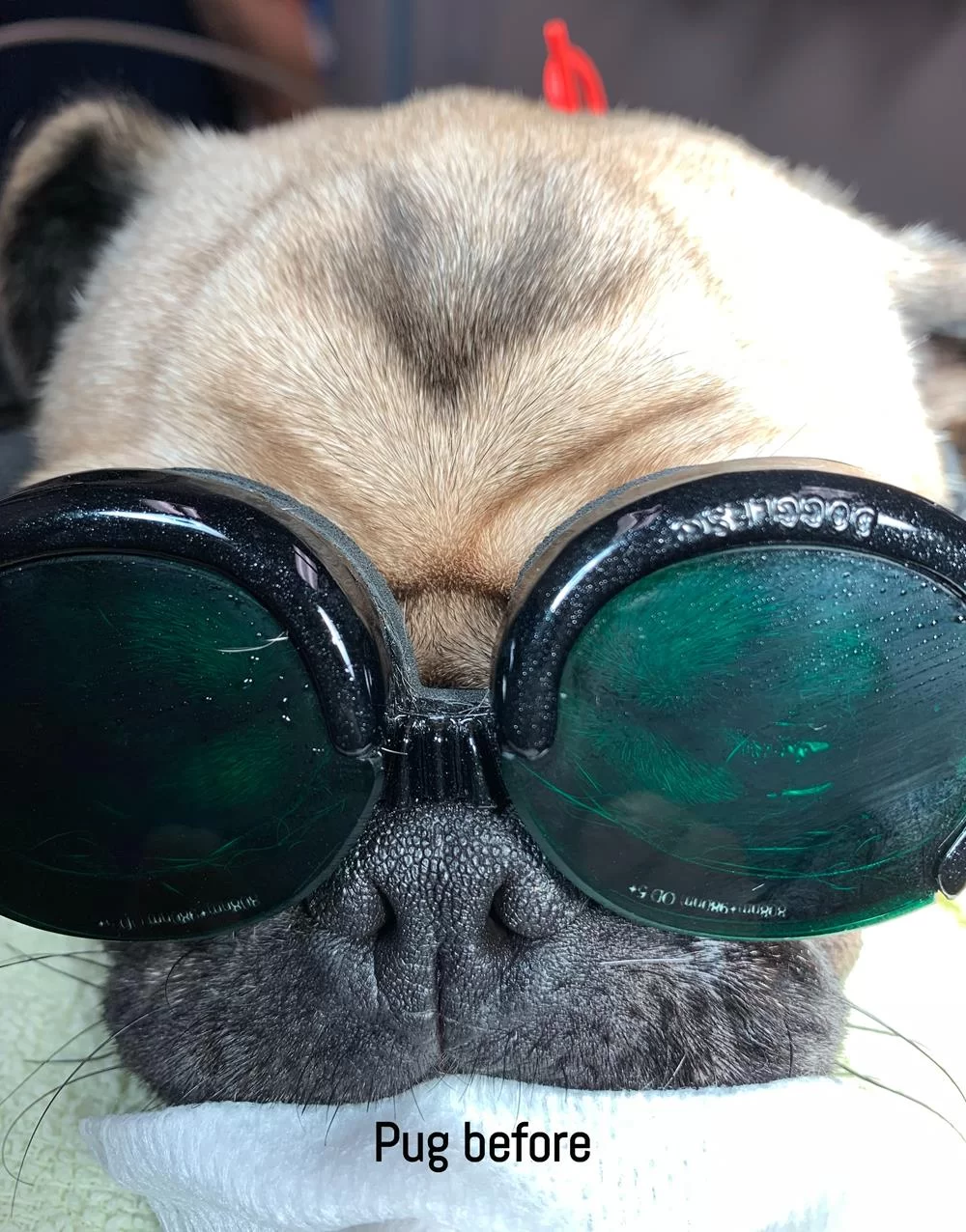
The photos below show real patients before and after surgery at our hospital.
French Bulldog: Before and After


The nostrils are visibly wider after surgery, allowing much easier airflow.
English Bulldog: Before and After


The nostrils are visibly wider after surgery, allowing much easier airflow.
Pug: Before and After
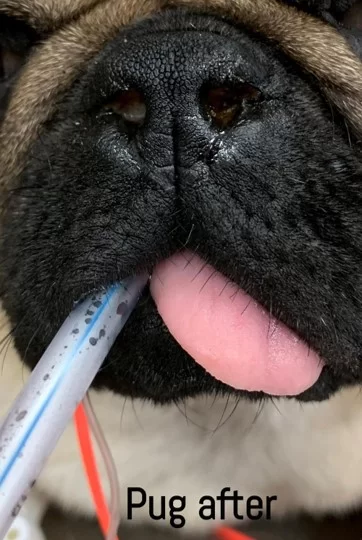
The nostrils are visibly wider after surgery, allowing much easier airflow.
Stenotic Nares Surgery FAQs
What are stenotic nares?
Stenotic nares are narrow or pinched nostrils that collapse inward when a pet breathes in, restricting airflow through the nose.
Which breeds need stenotic nares surgery?
It is most common in English and French Bulldogs, Pugs, Boston Terriers, Shih Tzus, Pekingese, and Persian cats.
When should stenotic nares surgery be done?
Early correction is best, ideally when pets are young, before secondary airway damage develops. It is often done at the same time as a spay or neuter.
Is stenotic nares surgery safe?
Yes, with appropriate precautions. We use careful airway management, continuous monitoring, and close recovery observation for every brachycephalic patient.
How long is recovery?
Most pets recover within about two weeks. Your veterinarian will provide home care instructions and schedule a recheck.
Will my dog still snore after surgery?
Many dogs breathe much more quietly after surgery, though some snoring may remain depending on the rest of the airway.
Can other airway problems be corrected at the same time?
Yes. Soft palate resection and removal of everted laryngeal saccules can often be performed during the same anesthesia.
Help Your Flat-Faced Pet Breathe Easier
Call (903) 617-6072 to schedule an airway evaluation for your Bulldog, Pug, or other brachycephalic pet.