
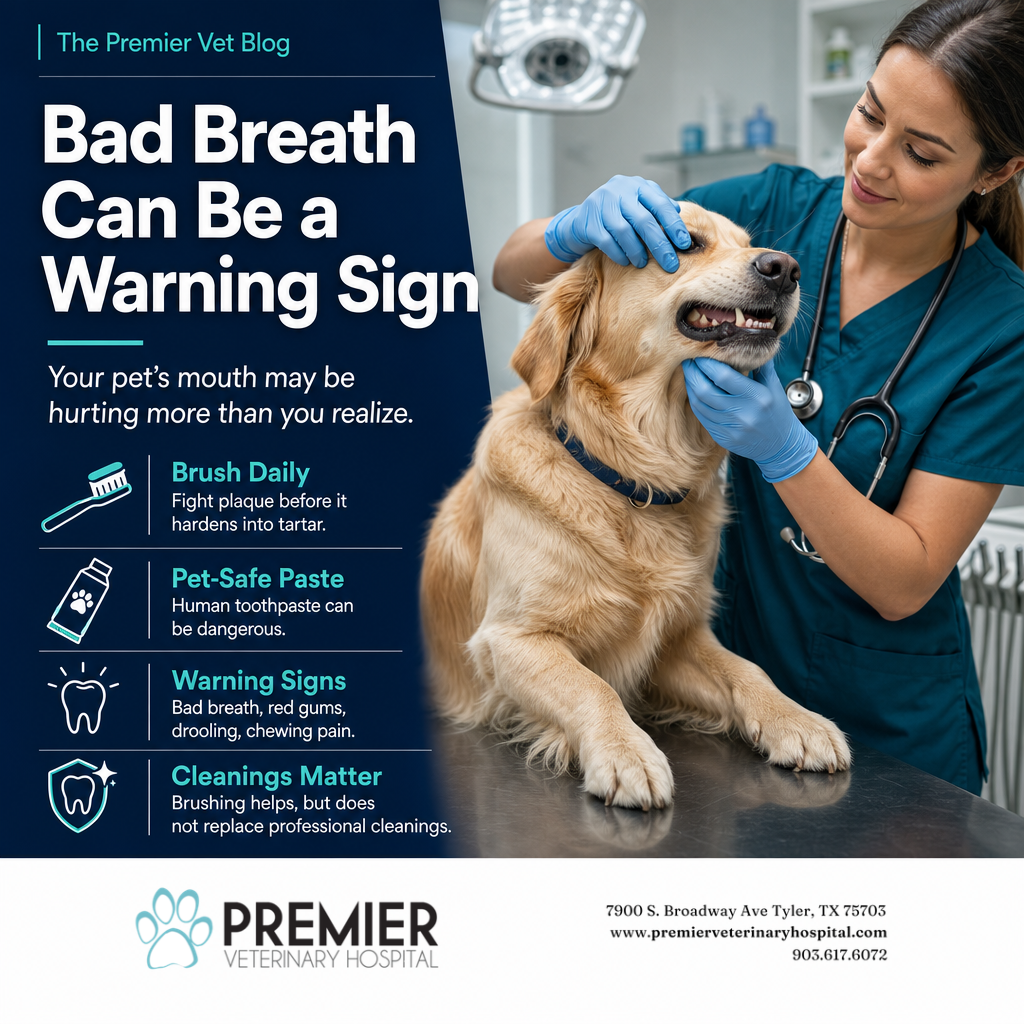
At Premier Veterinary Hospital in Tyler, Texas, we know many pet owners want to brush their pet’s teeth but aren’t sure where to start. This tooth brushing demonstration guide walks you through the process step by step, answers common questions, and explains when your pet may need a professional dental cleaning.
October is National Dental Health Month, and February is National Pet Dental Health Month. During these months, Premier Veterinary Hospital offers 10% off dental cleanings to help East Texas pets receive the preventive dental care they need.
Why Is Tooth Brushing Important for Dogs and Cats?
Tooth brushing helps remove plaque before it hardens into tartar. Plaque is a sticky film of bacteria that forms on the teeth. If it is not removed, it can mineralize into tartar, which cannot be brushed away at home and often requires professional dental cleaning. Dental disease can affect more than your pet’s mouth. Bacteria and inflammation in the gums may contribute to discomfort, tooth loss, and overall health concerns. While brushing does not replace veterinary dental care, it is one of the best at-home tools for supporting your pet’s oral health.
Benefits of Brushing Your Pet’s Teeth
Regular tooth brushing may help:
- Reduce plaque buildup
- Freshen breath
- Support healthier gums
- Slow tartar accumulation
- Help your pet become more comfortable with mouth handling
- Allow you to notice changes in the mouth earlier
How Often Should I Brush My Pet’s Teeth?
Ideally, pets should have their teeth brushed daily. Daily brushing is the most effective way to reduce plaque buildup. However, if daily brushing is not realistic, brushing several times per week is still beneficial. A good goal is:
-
- Daily brushing for best plaque control
- At least 3 times per week if daily brushing is difficult
- Regular veterinary dental exams and cleanings as recommended by your veterinarian
Consistency matters more than perfection. Even short brushing sessions can help when done regularly.
What Supplies Do I Need to Brush My Pet’s Teeth?
Before beginning a tooth brushing routine, gather the right supplies. Using pet-safe products is essential.
Pet Tooth Brushing Supplies
You will need:
- A pet toothbrush, finger brush, or soft gauze
- Veterinary-approved pet toothpaste
- Treats or praise for positive reinforcement
- A calm, quiet space
- Patience and short practice sessions
Can I Use Human Toothpaste on My Dog or Cat?
No. Human toothpaste should not be used for pets. Many human toothpastes contain ingredients that are not safe for dogs and cats, including fluoride or xylitol. Pets also swallow toothpaste rather than spit it out. Always use toothpaste made specifically for pets. Pet toothpaste comes in flavors many animals enjoy, such as poultry, beef, or seafood.
Tooth Brushing Demonstration: Step-by-Step Guide
The key to successful tooth brushing is introducing the process slowly and positively. Do not force your pet’s mouth open or rush the process. Some pets need several days or weeks to become comfortable.
Step 1: Choose a Calm Time
Pick a time when your pet is relaxed, such as after a walk, meal, or play session. Sit in a comfortable place where your pet feels secure. For small dogs and cats, you may place them on your lap or a stable surface. For larger dogs, sit beside them or position them comfortably on the floor.
Step 2: Let Your Pet Taste the Toothpaste
Place a small amount of pet toothpaste on your finger and allow your pet to lick it. This helps your pet associate the toothpaste with a positive experience. Repeat this for a few days if needed before introducing the toothbrush.
Step 3: Practice Touching the Lips and Gums
Gently lift your pet’s lip and touch the outside of the teeth and gums with your finger. Keep sessions short and reward your pet with praise or a treat. Focus on building comfort before attempting a full brushing session.
Step 4: Introduce the Toothbrush
Apply a small amount of pet toothpaste to the toothbrush or finger brush. Let your pet sniff or lick it first. Then gently lift the lip and place the brush at a slight angle along the gumline.
Step 5: Brush the Outside Surfaces of the Teeth
Use gentle circular motions to brush the outer surfaces of the teeth. This is where plaque tends to accumulate most. You do not need to brush the inside surfaces at first. Most pets tolerate brushing the outside surfaces more easily, and their tongue naturally helps clean the inside surfaces to some degree.
Step 6: Start Small and Build Up
Begin with just a few teeth, then gradually work up to brushing more of the mouth. A full brushing session may take less than one minute once your pet is comfortable. A simple goal is:
- Start with the front teeth
- Move to the canine teeth
- Gradually reach the back molars
- End with praise or a reward
Step 7: Keep It Positive
If your pet becomes stressed, stop and try again later. Tooth brushing should not feel like a battle. Short, positive sessions are more effective than long, stressful ones.
What If My Pet Won’t Let Me Brush Their Teeth?
Some pets need extra time to adjust, especially if they are older or already have dental discomfort. If your pet resists tooth brushing, do not force it.
Helpful Tips for Difficult Brushers
Try these strategies:
-
- Use a finger brush instead of a toothbrush
- Start with toothpaste on your finger only
- Brush just one or two teeth at a time
- Offer praise throughout the process
- Keep sessions under 30 seconds at first
- Practice daily without expecting perfection
- Ask your veterinary team for a hands-on demonstration
If your pet pulls away suddenly, cries, paws at the mouth, or seems painful, schedule a veterinary dental exam before continuing.
Common Signs of Dental Problems in Pets
Dental disease can be easy to miss because pets often hide pain. Bad breath is one of the most common early signs that something may be wrong.
Signs Your Pet May Need a Dental Exam
Schedule a veterinary visit if you notice:
-
- Bad breath
- Yellow or brown tartar on the teeth
- Red, swollen, or bleeding gums
- Drooling more than usual
- Pawing at the mouth
- Difficulty chewing
- Dropping food while eating
- Chewing on one side of the mouth
- Loose or missing teeth
- Facial swelling
- Decreased appetite
- Sensitivity when the mouth is touched
These signs do not always mean the same condition is present, but they do indicate that your pet should be evaluated by a veterinarian.
What Causes Dental Disease in Dogs and Cats?
Dental disease usually begins with plaque. Plaque forms when bacteria mix with saliva and food particles on the teeth. Over time, plaque hardens into tartar and irritates the gums.
Common Causes and Risk Factors
Pets may be more likely to develop dental disease due to:
-
- Infrequent tooth brushing
- Lack of professional dental cleanings
- Age
- Breed and genetics
- Crowded or misaligned teeth
- Retained baby teeth
- Chewing habits
- Diet and treat choices
- Underlying health conditions
Small breed dogs, toy breeds, senior pets, and some cats are especially prone to dental concerns. However, any pet can develop dental disease.
Does Tooth Brushing Replace Professional Dental Cleanings?
No. Tooth brushing helps reduce plaque at home, but it does not replace professional dental cleanings. Once tartar has hardened on the teeth or disease develops below the gumline, brushing alone cannot remove it. A veterinary dental cleaning allows the veterinary team to clean above and below the gumline, assess the mouth more thoroughly, and identify problems that may not be visible during a routine exam.
At-Home Brushing vs. Professional Dental Cleaning
<table header-row=”true”> <tr> <td>Dental Care Type</td> <td>What It Helps With</td> </tr> <tr> <td>At-home tooth brushing</td> <td>Reduces plaque and supports gum health</td> </tr> <tr> <td>Dental chews or rinses</td> <td>May provide added support when veterinarian-approved</td> </tr> <tr> <td>Veterinary dental exam</td> <td>Identifies signs of dental disease or oral pain</td> </tr> <tr> <td>Professional dental cleaning</td> <td>Removes tartar and cleans below the gumline</td> </tr> </table> Your veterinarian can recommend a dental care plan based on your pet’s age, breed, mouth condition, and overall health.
When Should I Schedule a Veterinary Dental Visit?
You should schedule a dental visit if your pet has signs of dental disease, has never had a dental exam, or is due for routine preventive care.
Schedule a Dental Appointment If:
-
- Your pet has persistent bad breath
- You see tartar or red gums
- Your pet seems painful when eating
- Your pet has loose or broken teeth
- Your pet is a senior and has not had recent dental care
- You want help learning how to brush your pet’s teeth
- Your veterinarian has recommended a dental cleaning
If you live in Tyler, Texas or the surrounding East Texas area, Premier Veterinary Hospital can evaluate your pet’s oral health and help you decide the next best step.
What Happens During a Pet Dental Cleaning?
A professional veterinary dental cleaning is more thorough than brushing at home. Your veterinarian will discuss the process, your pet’s health, and any recommended pre-anesthetic testing before the procedure.
A Veterinary Dental Cleaning May Include:
-
- Oral exam
- Dental scaling to remove plaque and tartar
- Cleaning below the gumline
- Polishing the teeth
- Assessment for damaged or diseased teeth
- Dental X-rays when recommended
- Treatment planning based on findings
Because every pet is different, your veterinary team will explain what is appropriate for your pet’s specific needs.
How Can I Prevent Dental Disease at Home?
The best prevention plan combines at-home care with regular veterinary dental evaluations.
Pet Dental Care Prevention Tips
To support your pet’s oral health:
-
- Brush your pet’s teeth daily or several times per week
- Use only pet-safe toothpaste
- Schedule regular wellness and dental exams
- Ask your veterinarian about dental chews or products
- Watch for changes in breath, eating, or gum appearance
- Do not ignore broken teeth or oral discomfort
- Follow your veterinarian’s recommendations for cleanings
When choosing dental products, look for veterinary guidance. Not all treats, chews, or water additives are equally helpful or appropriate for every pet.
Are Dental Chews Enough Without Brushing?
Dental chews may help support oral health, but they are not a complete replacement for brushing or veterinary cleanings. Some chews can reduce plaque or tartar, but they do not clean every tooth surface or address disease below the gumline. If your pet will not tolerate brushing, ask Premier Veterinary Hospital about safe alternatives and strategies. The best dental plan is one your pet can tolerate and you can maintain consistently.
How Early Should I Start Brushing My Pet’s Teeth?
It is best to start tooth brushing when your pet is young, but adult and senior pets can still learn. Puppies and kittens can be introduced to gentle mouth handling early so brushing becomes part of their normal routine. For adult pets, start slowly and be patient. If your pet already has tartar, inflamed gums, or mouth pain, schedule a dental exam before beginning a brushing routine.
Special Dental Savings in October and February
October is National Dental Health Month, and February is National Pet Dental Health Month. These months are a great time to prioritize your pet’s oral health. Premier Veterinary Hospital is pleased to offer:
10% Off Dental Cleanings During October and February
This seasonal dental savings opportunity can help pet owners in Tyler and East Texas stay proactive about their pet’s dental care. Appointments may be limited, so we encourage scheduling early.
Frequently Asked Questions About Brushing Your Pet’s Teeth
How long should I brush my pet’s teeth?
Most brushing sessions only need to last about 30 to 60 seconds once your pet is comfortable. Focus on the outside surfaces of the teeth and the gumline.
What if my pet’s gums bleed when I brush?
Mild bleeding may occur if gums are inflamed, but bleeding can also indicate dental disease or irritation. Stop brushing and schedule a veterinary dental exam for guidance.
Can cats have their teeth brushed?
Yes. Cats can benefit from tooth brushing, though they often need a slower introduction. Use a cat-safe toothbrush or finger brush and pet toothpaste.
Is bad breath normal in pets?
Occasional mild odor can happen, but persistent bad breath is not something to ignore. It is commonly associated with plaque, tartar, or gum disease and should be evaluated by a veterinarian.
Do older pets still need dental care?
Yes. Senior pets often need dental care, but recommendations depend on their overall health. Your veterinarian can discuss exam findings, safety considerations, and appropriate treatment options.
Schedule a Tooth Brushing Demonstration or Dental Exam in Tyler, Texas
Tooth brushing is one of the best ways to support your pet’s dental health at home, but you do not have to figure it out alone. The team at Premier Veterinary Hospital can demonstrate brushing techniques, recommend pet-safe dental products, and help determine whether your dog or cat needs a professional dental cleaning. If your pet has bad breath, tartar, red gums, or you would like help starting a dental care routine, we invite you to schedule an appointment.
Premier Veterinary Hospital 7900 South Broadway Ave. Tyler, TX 75703
Phone: 903-617-6072
Website: www.premierveterinaryhospital.com
Call today to schedule your pet’s dental visit and ask about 10% off dental cleanings during October and February.