By Premier Veterinary Hospital
More Than Fresh Breath: Why Dental Health Matters
When most people think about their pet’s dental health, they think about bad breath. While unpleasant breath is certainly common, it is often a sign of something much more serious.
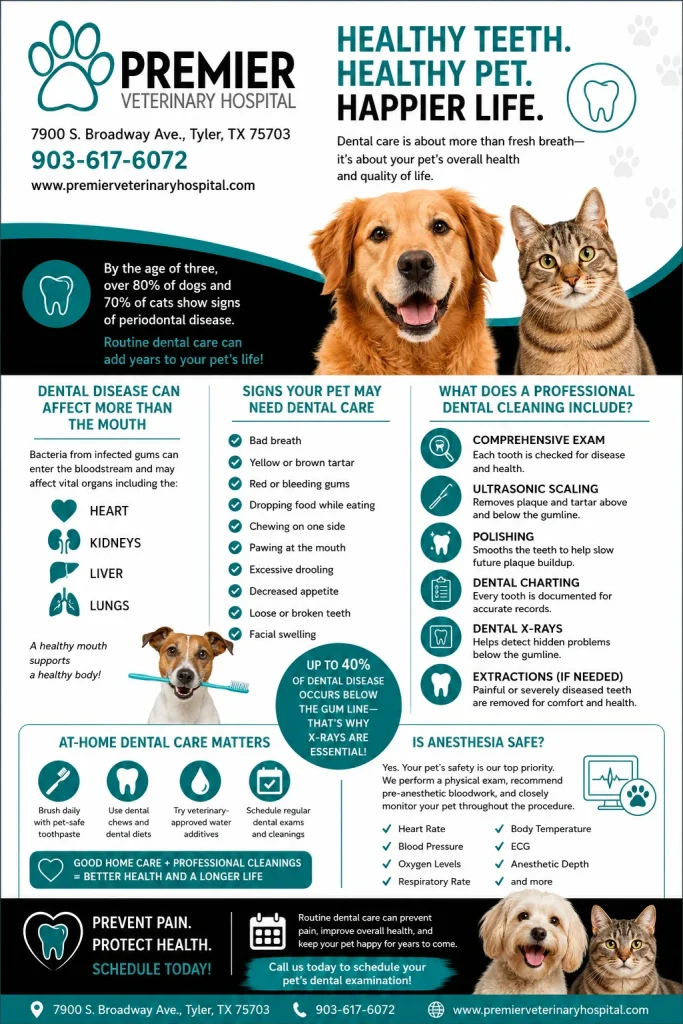
By the age of three, over 80% of dogs and 70% of cats show signs of periodontal (gum) disease. Unfortunately, this disease often progresses silently beneath the gumline long before owners notice obvious symptoms.
Dental disease is not just a problem in the mouth—it can affect your pet’s entire body.
At Premier Veterinary Hospital, we believe routine dental care is one of the most important investments you can make in your pet’s long-term health and quality of life.
What Is Periodontal Disease?
Periodontal disease begins when bacteria combine with food particles and saliva to form plaque on the teeth.
Without regular cleaning, plaque hardens into tartar (calculus), which cannot be removed by brushing alone.
As bacteria continue to grow, they cause:
- Gingivitis (inflamed gums)
- Infection around the teeth
- Bone loss
- Loose or missing teeth
- Pain while eating
- Oral infections
- Tooth root abscesses
The disease develops below the gumline where it often cannot be seen without a professional dental examination.
Dental Disease Can Affect More Than the Mouth
The bacteria responsible for dental disease don’t stay in the mouth.
As inflammation worsens, bacteria can enter the bloodstream and potentially affect important organs including:
- Heart
- Kidneys
- Liver
- Lungs
Chronic oral infection places stress on the immune system and may contribute to other health problems as pets age.
Keeping your pet’s mouth healthy helps support their overall health.
Signs Your Pet May Need a Dental Cleaning
Many pets continue eating normally despite significant dental pain. Watch for signs such as:
- Bad breath
- Yellow or brown tartar buildup
- Red or bleeding gums
- Dropping food while eating
- Chewing on one side
- Pawing at the mouth
- Decreased interest in hard food
- Excessive drooling
- Facial swelling
- Loose or broken teeth
If your pet has any of these signs, it’s time for a dental examination.
What Happens During a Professional Dental Cleaning?
Unlike cosmetic cleanings performed while a pet is awake, professional veterinary dental cleanings are performed under general anesthesia so every surface of every tooth can be cleaned safely and thoroughly.
At Premier Veterinary Hospital, your pet’s dental procedure includes:
Comprehensive Oral Examination
Each tooth is evaluated individually for disease, fractures, mobility, and gum health.
Ultrasonic Scaling
Plaque and tartar are removed both above and below the gumline where disease begins.
Polishing
Teeth are polished to smooth microscopic scratches left after scaling, helping slow future plaque accumulation.
Dental Charting
Each tooth is carefully documented for future comparison.
Dental Radiographs (X-rays)
Many painful dental conditions occur beneath the gumline and cannot be seen during a visual exam. Dental X-rays allow us to detect:
- Tooth root abscesses
- Bone loss
- Fractured roots
- Impacted teeth
- Tooth resorption in cats
- Hidden infections
Studies show that up to 40% of dental disease occurs below the gumline, making dental radiographs an essential part of comprehensive dental care.
Tooth Extractions (When Necessary)
If a tooth is severely diseased or painful, extraction may be recommended to eliminate infection and restore comfort.
Pets typically feel significantly better once painful teeth are removed.
Is Anesthesia Safe?
This is one of the most common questions we receive.
Modern veterinary anesthesia is very safe when performed appropriately.
Before every dental procedure, we perform a physical examination and recommend pre-anesthetic bloodwork to evaluate organ function.
During anesthesia, our trained team continuously monitors:
- Heart rate
- Blood pressure
- Oxygen levels
- Carbon dioxide
- Respiratory rate
- Body temperature
- ECG
- Anesthetic depth
Safety is our highest priority throughout your pet’s procedure.
At-Home Dental Care Matters Too
Professional cleanings are only one part of maintaining good oral health. We also recommend:
- Daily tooth brushing with pet-safe toothpaste
- Veterinary-approved dental chews
- Dental diets when appropriate
- Water additives recommended by your veterinarian
- Regular oral examinations during wellness visits
The earlier dental disease is addressed, the easier—and often less expensive—it is to treat.
How Often Does My Pet Need a Dental Cleaning?
Every pet is different.
Factors that influence dental health include:
- Breed
- Age
- Genetics
- Diet
- Home dental care
- Existing dental disease
Many dogs benefit from professional cleanings every 1–2 years, while some small breeds and certain cats may require more frequent care.
Your veterinarian will recommend the schedule that’s best for your pet.
Preventing Pain Before It Starts
One of the biggest challenges with dental disease is that pets rarely show obvious signs of pain.
Many owners are surprised by how much happier, more energetic, and more playful their pets become after a professional dental cleaning and treatment.
A healthy mouth often means:
- Better appetite
- More comfortable chewing
- Fresher breath
- Less chronic pain
- Improved overall health
- Better quality of life
Schedule Your Pet’s Dental Examination Today
Dental disease is one of the most common—and most preventable—medical conditions we see in dogs and cats.
Routine dental examinations and professional cleanings help prevent pain, protect important organs, and keep your pet healthier for years to come.
If your pet has bad breath, visible tartar, or has never had a professional dental cleaning, now is the perfect time to schedule an examination.
Premier Veterinary Hospital
7900 South Broadway Ave. Tyler, TX 75703
903-617-6072
Website: premierveterinaryhospital.com
Healthy teeth. Healthy gums. A healthier, happier pet for life.