
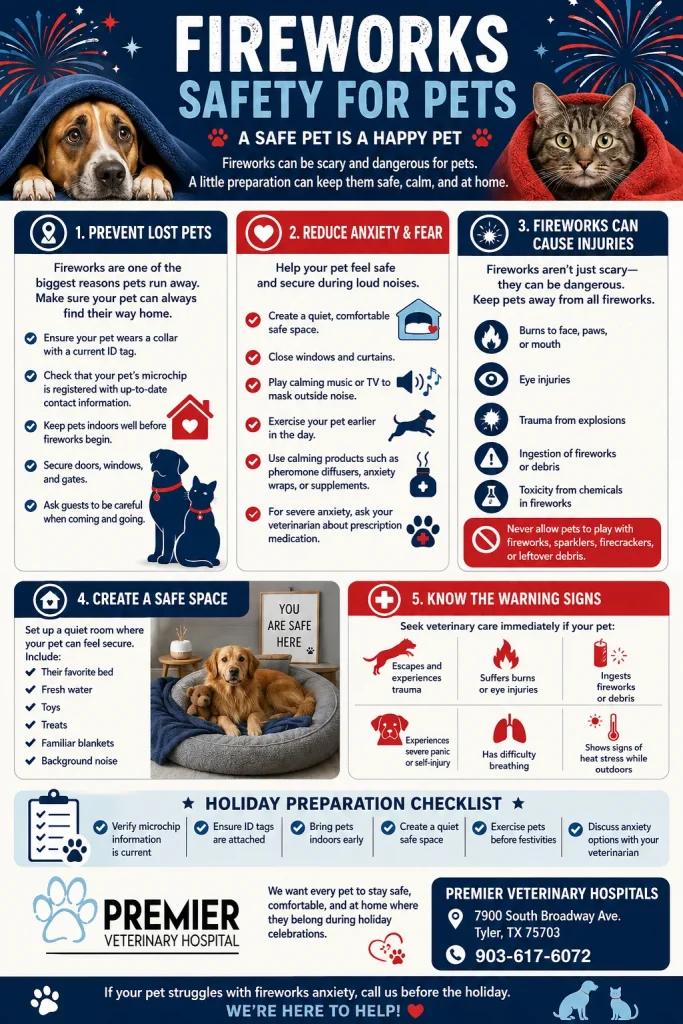
As holidays like the Fourth of July approach, many families look forward to fireworks, backyard gatherings, and celebrations with friends and family. While fireworks can be exciting for people, they can be frightening and dangerous for our pets.
Every year, veterinary hospitals and animal shelters see a significant increase in lost pets, anxiety-related injuries, and emergency visits associated with fireworks. Understanding the risks and taking a few preventive measures can help keep your pet safe and comfortable throughout the holiday.
Why Are Fireworks So Stressful for Pets?
Dogs and cats have much more sensitive hearing than humans. The loud, unpredictable noises, bright flashes, and unusual smells associated with fireworks can trigger a strong fear response.
Pets may experience:
- Trembling or shaking
- Hiding
- Excessive panting
- Pacing
- Vocalizing or whining
- Destructive behavior
- Attempts to escape
- Loss of appetite
- Urination or defecation in the home
Even pets that are normally calm and confident may become frightened during fireworks displays.
Lost Pets: The Biggest Fireworks Danger
One of the most common consequences of fireworks is pets running away. A startled pet can:
- Jump fences
- Break leashes
- Push through screens
- Escape through open doors
- Slip out of collars or harnesses
Animal shelters report that the days surrounding Independence Day are among the busiest times of the year for lost pets.
How to Prevent Your Pet From Getting Lost
Ensure Identification Is Current
Make sure your pet is wearing a collar with an up-to-date identification tag.
Even more importantly, verify that your pet’s microchip registration information is current. A microchip is one of the most effective ways to reunite lost pets with their families.
Keep Pets Indoors
Bring pets indoors well before fireworks begin. Do not leave pets outside unattended, even in a secure backyard.
Secure Doors and Gates
Remind family members and guests to be careful when entering and leaving the home. A frightened pet may bolt through an open door unexpectedly.
Consider a Safe Room
Set up a quiet room where your pet can feel secure. Include:
- Their favorite bed
- Water
- Toys
- Treats
- Familiar blankets
This can provide a comforting retreat during periods of loud noise.
Fireworks Can Cause Serious Injuries
Fireworks themselves can be hazardous to pets. Potential injuries include:
- Burns to the face, paws, or mouth
- Eye injuries
- Trauma from explosions
- Ingestion of fireworks or debris
- Toxicity from chemicals found in fireworks
Even unused fireworks contain substances that can be dangerous if chewed or swallowed.
Never allow pets to play with fireworks, sparklers, firecrackers, or debris left behind after a celebration.
Helping Nervous Pets Stay Calm
If your pet becomes anxious during fireworks, there are several things you can do to help.
Create Background Noise
Close windows and curtains and play calming music, television, or white noise to help mask outdoor sounds.
Maintain a Calm Environment
Pets often take cues from their owners. Speak calmly and avoid reinforcing fearful behavior by becoming anxious yourself.
Exercise Earlier in the Day
A long walk or play session before the festivities begin may help reduce excess energy and anxiety.
Use Calming Products
Some pets benefit from:
- Calming pheromone products
- Anxiety wraps or compression garments
- Veterinary-approved calming supplements
These products work best when introduced before the event.
Ask Your Veterinarian About Anxiety Medication
For pets with severe noise phobias, prescription medications may be appropriate. Modern anti-anxiety medications can significantly reduce fear and stress during fireworks and thunderstorms.
If your pet has struggled with fireworks in the past, contact your veterinarian before the holiday to discuss options.
Signs Your Pet Needs Veterinary Attention
Seek veterinary care immediately if your pet:
- Escapes and experiences trauma
- Suffers burns or eye injuries
- Ingests fireworks or debris
- Experiences severe panic or self-injury
- Has difficulty breathing
- Shows signs of heat stress while outdoors
Prompt treatment can prevent serious complications.
A Safe Holiday for the Whole Family
Fireworks celebrations can be enjoyable for people while remaining safe for pets with proper planning.
Before the holiday: ✓ Verify microchip information is current
- Ensure ID tags are attached
- Bring pets indoors early
- Create a quiet safe space
- Exercise pets before festivities begin
- Discuss anxiety treatment options with your veterinarian if needed
Taking these simple steps can greatly reduce the risk of lost pets, injuries, and anxiety-related emergencies.
At Premier Veterinary Hospital, we want every pet to stay safe, comfortable, and at home where they belong during holiday celebrations. If your pet struggles with fireworks anxiety or you would like to discuss preventive options before the holiday, our team is happy to help.