
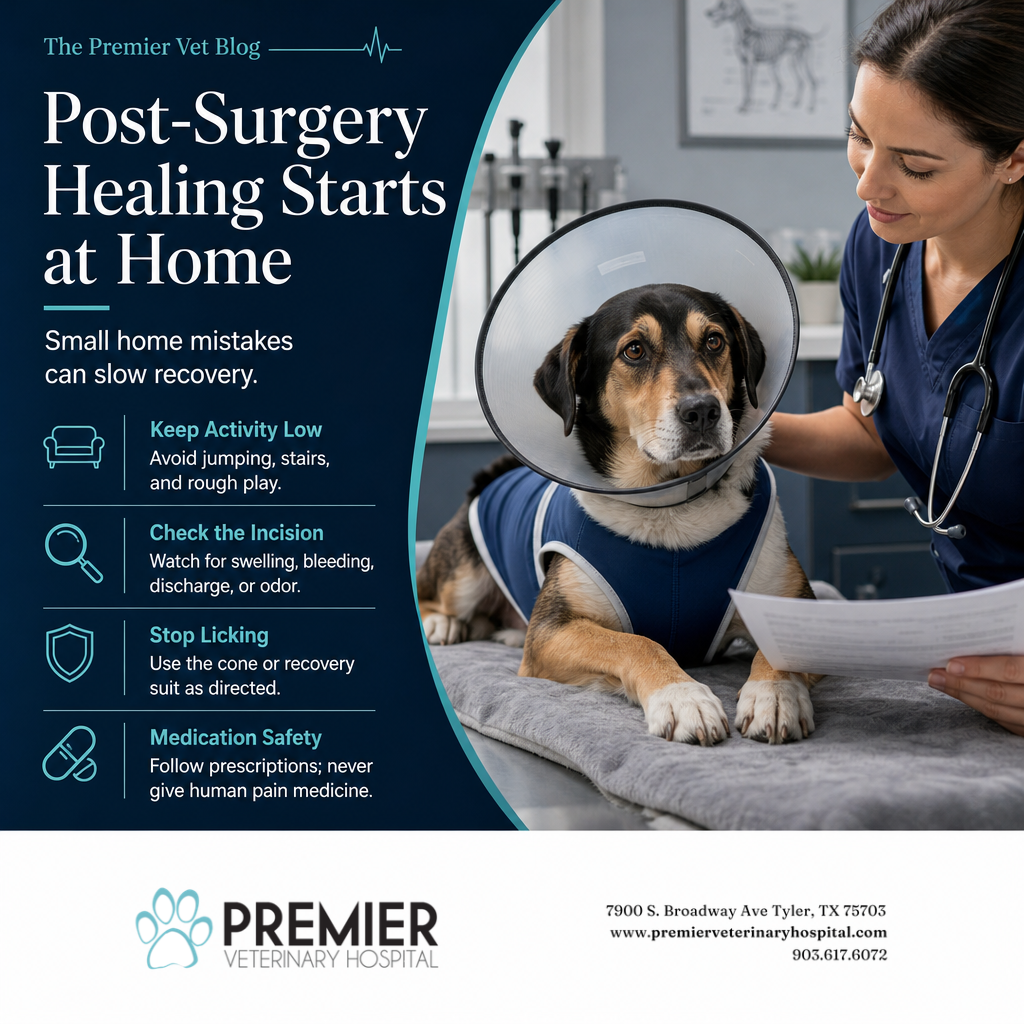
 Helping Your Pet Recover Comfortably After Surgery
Bringing your pet home after surgery can feel overwhelming, even when the procedure went smoothly. Whether your dog or cat had a spay or neuter, mass removal, dental procedure, orthopedic surgery, or another operation, a calm recovery plan is essential. At Premier Veterinary Hospital in Tyler, Texas, we help pet owners feel confident about post-surgical care. While every pet and procedure is different, most recovery plans focus on the same goals: rest, pain control, incision protection, proper nutrition, and close monitoring.
Quick Answer: What Should I Do After My Pet Has Surgery?
After surgery, your pet should rest in a quiet space, avoid running or jumping, take medications exactly as prescribed, wear an e-collar if recommended, and have their incision checked daily. Call your veterinarian if you notice swelling, bleeding, discharge, worsening pain, vomiting, lethargy, or if your pet will not eat or drink.
What to Expect During Pet Surgery Recovery
Many pets are sleepy, wobbly, or quieter than usual for the first 12–24 hours after anesthesia. Mild tiredness can be normal, but your pet should gradually become more alert.
Common normal post-surgery signs may include:
-
- Sleepiness the day of surgery
- Mild appetite decrease for the first meal
- Slight tenderness near the surgical area
- Small amount of redness around the incision
- Temporary changes in bathroom habits
If anything seems severe, worsening, or unusual for your pet, contact your veterinary team for guidance.
How Long Does It Take a Pet to Recover After Surgery?
Recovery time depends on the type of surgery, your pet’s age, overall health, and activity level.
General recovery timelines:
-
- Minor procedures: A few days to 1 week
- Spay/neuter or soft tissue surgery: Often 10–14 days
- Dental surgery: Several days to 2 weeks, depending on extractions
- Orthopedic surgery: Several weeks to months with strict activity control
Your veterinarian will provide specific instructions based on your pet’s procedure.
At-Home Care After Pet Surgery
1. Create a Quiet Recovery Space
Your pet should rest in a clean, calm area away from stairs, furniture, children, and other pets. A crate, small room, or gated area can help prevent sudden movement.
2. Limit Activity
Too much activity can delay healing or cause incision complications. Unless your veterinarian says otherwise, avoid:
-
- Running
- Jumping on furniture
- Rough play
- Long walks
- Climbing stairs
- Swimming or bathing
For dogs, leash walks should usually be limited to short bathroom breaks during early recovery.
3. Protect the Incision
Your pet may need an e-collar, surgical suit, or other barrier to prevent licking or chewing. Licking can introduce bacteria and may cause the incision to open. Check the incision once or twice daily for changes, but avoid touching or cleaning it unless your veterinarian has instructed you to do so.
4. Give Medications Exactly as Directed
Your pet may go home with pain medication, antibiotics, anti-inflammatory medication, or other prescriptions. Give all medications exactly as labeled. Never give human pain medications, such as ibuprofen, acetaminophen, or aspirin, unless specifically directed by your veterinarian. Some human medications can be dangerous or toxic to pets.
5. Encourage Eating and Drinking
Offer a small meal when your veterinarian recommends it. Some pets may have a reduced appetite after anesthesia, but they should begin eating again within the timeframe provided in your discharge instructions. Call your veterinarian if your pet refuses food, cannot keep food down, or is not drinking.
Signs of a Problem After Surgery
Contact your veterinarian promptly if you notice any of the following:
-
- Incision opening or missing stitches
- Excessive redness, swelling, or heat
- Bleeding or pus-like discharge
- Foul odor from the incision
- Persistent vomiting or diarrhea
- Severe lethargy or weakness
- Pale gums or difficulty breathing
- Crying, shaking, or signs of uncontrolled pain
- Refusal to eat or drink
- Trouble urinating or defecating
- Sudden swelling near the surgery site
These signs do not always mean there is a serious complication, but they should be evaluated by a veterinary professional.
Common Causes of Post-Surgery Complications
Post-surgical issues can happen for several reasons, including:
-
- Too much activity too soon
- Licking, chewing, or scratching the incision
- Missed medication doses
- Infection or inflammation
- Reaction to sutures or bandaging
- Underlying health conditions
- Trauma to the surgical area
Following your discharge instructions closely is one of the best ways to reduce risk.
How to Help Prevent Surgical Complications
You can support your pet’s healing by following these steps:
-
- Use the e-collar or recovery garment as instructed.
- Keep your pet calm and confined during the healing period.
- Give medications on schedule.
- Check the incision daily.
- Do not bathe your pet until cleared by your veterinarian.
- Attend all recheck appointments.
- Call your vet if you are unsure about a symptom.
In East Texas, pets may be eager to return to outdoor routines quickly, but rest is especially important after surgery—even if your pet “seems fine.”
When Should I Schedule a Veterinary Visit After Surgery?
Schedule a veterinary visit or call your veterinarian if your pet’s recovery seems painful, delayed, or abnormal. You should also keep all recommended recheck appointments, even if the incision looks good. A recheck allows your veterinary team to evaluate healing, remove sutures if needed, adjust medications, and answer your questions.
Frequently Asked Questions About Pet Surgery Recovery
How do I know if my pet is in pain after surgery?
Signs of pain may include whining, hiding, shaking, restlessness, panting, decreased appetite, guarding the surgery area, or reluctance to move. If you think your pet is uncomfortable, call your veterinarian before changing or adding medication.
Is it normal for my pet to sleep a lot after surgery?
Yes, sleepiness is common after anesthesia and surgery, especially the first day. However, your pet should become more alert over time. Severe weakness, collapse, or extreme lethargy should be addressed right away.
Can my pet lick the incision?
No. Licking can delay healing and increase the risk of infection or incision opening. Use an e-collar, cone, or recovery suit if recommended.
What should my pet’s incision look like?
A healing incision may have mild redness and slight swelling. It should not have heavy bleeding, pus, a bad smell, widening gaps, or rapidly increasing swelling. If you notice these changes, contact your veterinarian.
When can my dog go on walks after surgery?
Most dogs should only take short leash walks for bathroom breaks during early recovery. Your veterinarian will tell you when longer walks or normal exercise can safely resume.
When can my pet have a bath after surgery?
Do not bathe your pet until your veterinarian says it is safe. Moisture can interfere with incision healing and increase the risk of complications.
What if my pet will not eat after surgery?
A mild decrease in appetite can happen after anesthesia. If your pet refuses food for longer than your discharge instructions indicate, vomits repeatedly, or seems very weak, call your veterinarian.
Do all pets need a recheck after surgery?
Many surgical procedures require a recheck, especially if sutures, staples, bandages, or activity restrictions are involved. Follow your veterinarian’s recommendations for your pet’s specific procedure.
Schedule Post-Surgery Care in Tyler, Texas
Recovery after surgery takes patience, rest, and careful monitoring. If you have concerns about your pet’s incision, comfort, medications, or healing progress, the team at Premier Veterinary Hospital is here to help. To schedule an appointment or post-surgery recheck, contact: Premier Veterinary Hospital 7900 South Broadway Ave. Tyler, TX 75703 Phone: 903-617-6072 Website: www.premierveterinaryhospital.com