
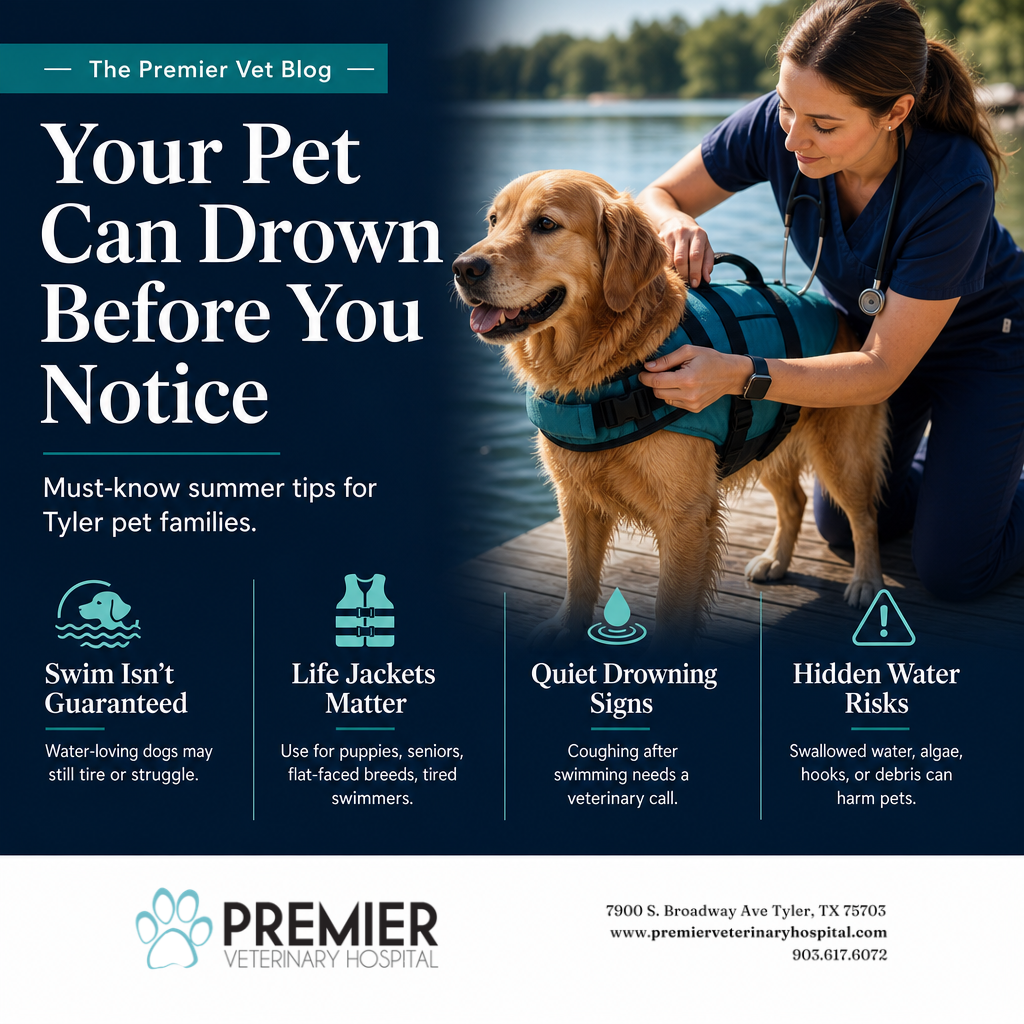
Summer in East Texas often means backyard pools, lake days, boating, and family time outdoors. While many pets enjoy the water, swimming is not automatically safe for every dog—or every cat. At Premier Veterinary Hospital in Tyler, Texas, we want pet owners to feel confident helping their companions enjoy summer activities while reducing risks like drowning, heat stress, ear infections, and water toxicity.
Can All Dogs Swim?
No. Not all dogs can swim naturally or safely. Some dogs love water, while others panic, tire quickly, or struggle because of their body shape.
Pets who may be at higher risk in water include:
- Flat-faced breeds, such as Bulldogs, Pugs, and French Bulldogs
- Short-legged or heavy-bodied dogs
- Senior pets
- Puppies
- Overweight pets
- Pets with arthritis, heart disease, respiratory issues, or neurologic conditions
- Pets recovering from surgery or illness
Even strong swimmers should always be supervised around pools, ponds, lakes, and boats.
Common Swimming Risks for Pets
Drowning or Near-Drowning
Drowning can happen quickly and quietly. Pets may fall into a pool, become disoriented, or tire before reaching an exit.
Warning signs after a water incident may include:
- Coughing or gagging
- Difficulty breathing
- Blue, pale, or gray gums
- Weakness or collapse
- Vomiting
- Extreme tiredness
- Foamy fluid from the nose or mouth
If your pet struggles in water or inhales water, seek veterinary care right away—even if they seem better at first.
Water Intoxication
Water intoxication can occur when a pet swallows too much water during swimming, dock diving, sprinkler play, or repeatedly fetching toys from the water.
Possible signs include:
- Vomiting
- Bloating
- Lethargy
- Loss of coordination
- Drooling
- Confusion
- Seizures
This can become serious quickly and requires urgent veterinary attention.
Heat Stress Around Water
Swimming does not always prevent overheating, especially during hot, humid Tyler summers. Dogs can still develop heat stress while playing near water, boating, or running on hot docks and pavement.
Signs of heat stress include:
- Heavy panting
- Excessive drooling
- Weakness
- Bright red gums
- Vomiting or diarrhea
- Stumbling
- Collapse
Move your pet to shade or air conditioning and call your veterinarian promptly if you notice concerning signs.
Ear Infections and Skin Irritation
Moisture trapped in the ears can increase the risk of ear infections, especially in dogs with floppy ears or allergy-prone skin.
Watch for:
- Head shaking
- Scratching at ears
- Redness
- Odor
- Discharge
- Sensitivity when ears are touched
After swimming, gently dry your pet’s ears and coat. Do not insert cotton swabs deep into the ear canal.
How to Keep Pets Safe While Swimming
1. Use a Pet Life Jacket
A properly fitted pet life jacket is recommended for boating, lake trips, first-time swimmers, senior pets, and any dog who tires easily.
Choose one with:
- A sturdy handle
- Bright colors or reflective strips
- A snug but comfortable fit
- Support under the chest and belly
2. Teach Pool Exits
If you have a pool, show your pet how to get out using steps, ramps, or shallow entries. Practice calmly and reward them for finding the exit.
3. Supervise Every Swim
Never leave pets unattended around water. Pool covers, ponds, and lakes can all be dangerous if a pet falls in or becomes trapped.
4. Offer Fresh Drinking Water
Encourage your pet to drink clean water instead of pool, lake, pond, or salt water. This helps reduce the risk of stomach upset, toxin exposure, and excessive water swallowing.
5. Take Breaks
Limit intense water play and schedule rest breaks in the shade. Watch for fatigue, heavy panting, or changes in behavior.
6. Rinse and Dry After Swimming
Rinse your pet with clean water after swimming in pools, lakes, or ponds. Dry ears, paws, and skin folds to help reduce irritation.
Is Pool Water Safe for Dogs?
Small amounts of chlorinated pool water may cause mild stomach upset, but pets should not be allowed to drink pool water regularly. Pool chemicals, saltwater systems, and large amounts of swallowed water can be irritating or harmful.
Keep a bowl of fresh water nearby and redirect your pet if they try to drink from the pool.
Are Lakes and Ponds Safe for Pets in East Texas?
Lakes and ponds can pose risks such as bacteria, parasites, fishing hooks, sharp objects, and blue-green algae. Blue-green algae can be toxic and may appear as green, blue-green, red, or brown scum on the surface of the water.
Avoid water that:
- Looks discolored or foamy
- Smells bad
- Has visible algae mats or scum
- Is stagnant or unusually warm
- Has dead fish or wildlife nearby
If your pet swims in questionable water, rinse them immediately and call your veterinarian for guidance.
When Should I Call a Veterinarian After Swimming?
Schedule a veterinary visit or call Premier Veterinary Hospital if your pet shows any unusual signs after swimming, including:
- Coughing after water exposure
- Trouble breathing
- Vomiting or diarrhea
- Extreme tiredness
- Head shaking or ear odor
- Skin redness or itching
- Limping or injury
- Weakness, confusion, or collapse
Seek emergency care immediately if your pet has difficulty breathing, collapses, has seizures, or may have ingested toxic algae or a large amount of water.
Swimming Safety FAQ
How long can my dog safely swim?
It depends on your dog’s age, breed, fitness level, health, and water conditions. Start with short sessions of 5–10 minutes, offer breaks, and stop if your dog seems tired, anxious, or overheated.
Should my dog wear a life jacket in the pool?
A life jacket is a good idea for puppies, seniors, flat-faced breeds, new swimmers, and any dog who may struggle. It is also recommended for boating or swimming in lakes.
Can dogs get sick from lake water?
Yes. Dogs can become sick from bacteria, parasites, algae toxins, or swallowing contaminated water. If your pet vomits, has diarrhea, becomes lethargic, or acts abnormal after lake swimming, contact your veterinarian.
What should I do if my dog inhales water?
Remove your dog from the water, keep them calm, and call a veterinarian immediately. Breathing issues can develop after the incident, even if your dog initially appears normal.
How can I prevent ear infections after swimming?
Dry your dog’s ears gently after swimming and watch for head shaking, odor, redness, or discharge. If your dog has frequent ear problems, ask your veterinarian about safe ear-cleaning options.
Enjoy Summer Water Fun Safely
Swimming can be a great summer activity for many pets, but safety comes first. Supervision, life jackets, fresh water, rest breaks, and awareness of warning signs can help protect your pet during pool days and East Texas lake adventures.
If you have questions about your pet’s swimming safety, summer health, ear care, or water-related concerns, schedule an appointment with Premier Veterinary Hospital in Tyler, Texas.
Premier Veterinary Hospital
7900 South Broadway Ave.
Tyler, TX 75703
7900 South Broadway Ave.
Tyler, TX 75703
Call: 903-617-6072