Brachycephalic Airway Syndrome Treatment in Tyler, TX
Snoring, snorting, and labored breathing are not normal, even for Bulldogs, Pugs, and other flat-faced breeds. At Premier Veterinary Hospital, we diagnose and surgically correct brachycephalic airway problems so your pet can breathe easier, sleep better, and enjoy a more active life.
Request an AppointmentWhat Is Brachycephalic Airway Syndrome?
Brachycephalic means “short-headed.” Breeds such as English Bulldogs, French Bulldogs, Pugs, Boston Terriers, Shih Tzus, Pekingese, and Persian cats have been bred for short muzzles and flat faces. Unfortunately, the soft tissues of the nose and throat did not shrink along with the skull, so these pets often have narrowed, crowded airways. Brachycephalic airway syndrome (BAS) is the term for the combination of abnormalities that make breathing difficult for these breeds.
Components of Brachycephalic Airway Syndrome
- Stenotic nares: Narrow, pinched nostrils that collapse inward when the pet breathes in, restricting airflow through the nose.
- Elongated soft palate: The soft palate is too long and its tip extends into the airway, partially blocking air from reaching the lungs.
- Everted laryngeal saccules: Small pouches of tissue in front of the vocal cords are pulled into the airway by constant breathing effort and further obstruct airflow.
- Hypoplastic trachea: Some pets also have an abnormally narrow windpipe.
Over time, the extra effort required to breathe can lead to laryngeal collapse, a serious and often irreversible complication. That is why early evaluation and treatment are so important.
Signs of Brachycephalic Airway Syndrome
Many owners assume snoring and snorting are just part of their breed’s personality, but they are actually signs of an obstructed airway. Common signs include loud breathing, snoring, snorting, open-mouth breathing, exercise intolerance, gagging or regurgitation, difficulty eating, restless sleep or sleeping sitting up, a bluish tongue or gums, and collapse. Brachycephalic pets are also at very high risk for heatstroke during hot East Texas summers because they cannot pant efficiently to cool down.
Diagnosing BAS
Stenotic nares can usually be seen during a physical exam. Evaluating the soft palate and laryngeal saccules requires a brief sedated airway exam. Chest radiographs from our diagnostic department help assess the trachea and look for secondary problems such as aspiration pneumonia. In some cases, endoscopic evaluation of the airway provides additional detail.
Treatment Options
Surgery is the most effective way to open the airway and improve quality of life. Our stenotic nares surgery widens the nostrils to allow easier airflow, and it can be combined with soft palate resection and removal of everted saccules when needed. Correcting the airway early, ideally when pets are young, can prevent progression to laryngeal collapse. Many owners schedule airway surgery at the same time as their pet’s spay or neuter to avoid a second anesthetic event. Every brachycephalic patient receives the advanced anesthetic monitoring described on our surgery page and careful recovery observation in our hospital.
Managing BAS at Home
Keeping your pet lean, using a harness instead of a collar, avoiding strenuous exercise in heat and humidity, and providing air-conditioned rest areas all reduce breathing strain. A healthy weight plan through our nutrition services is especially helpful. If your pet ever struggles to breathe or collapses, treat it as a pet emergency.
Real Results for Flat-Faced Breeds
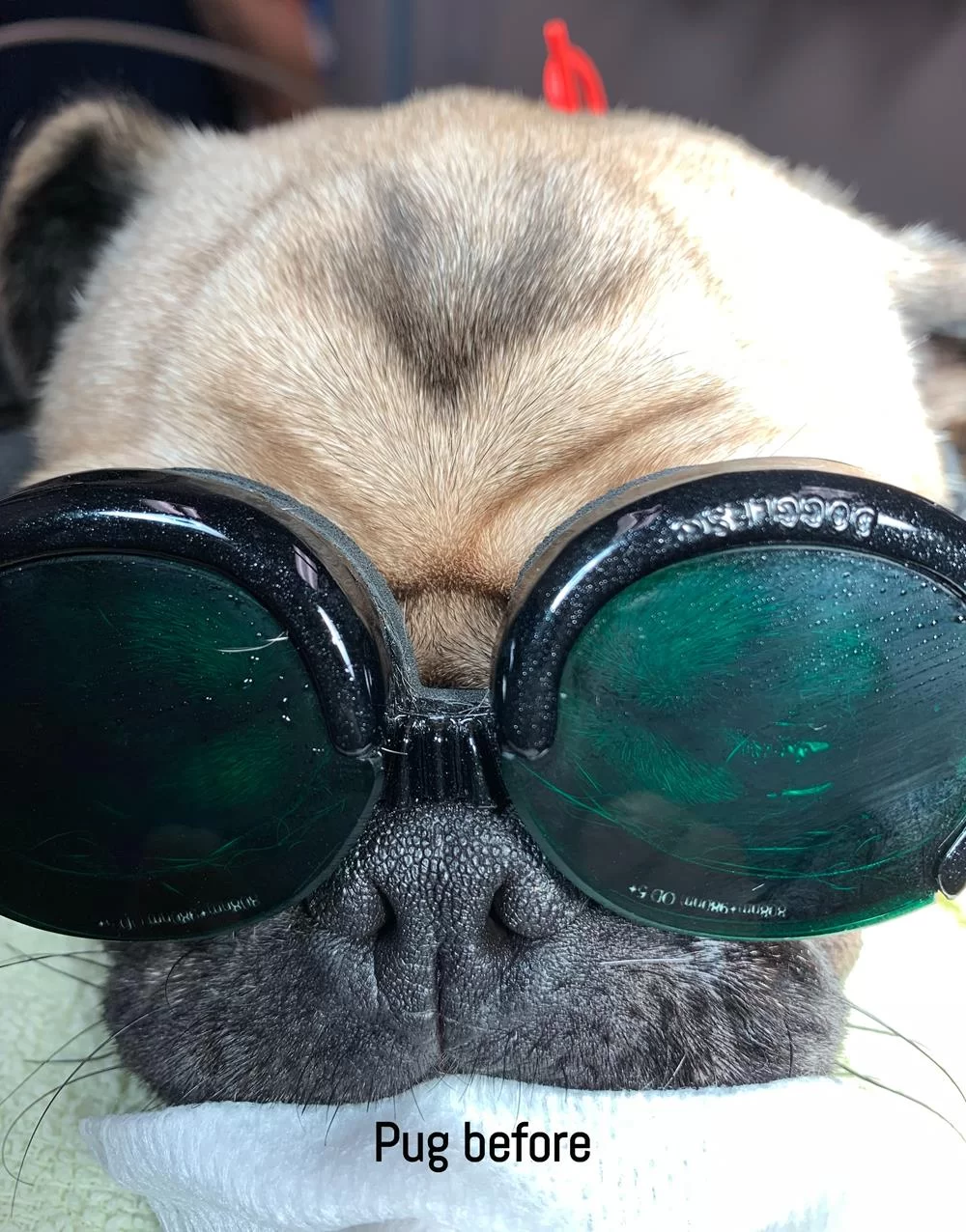
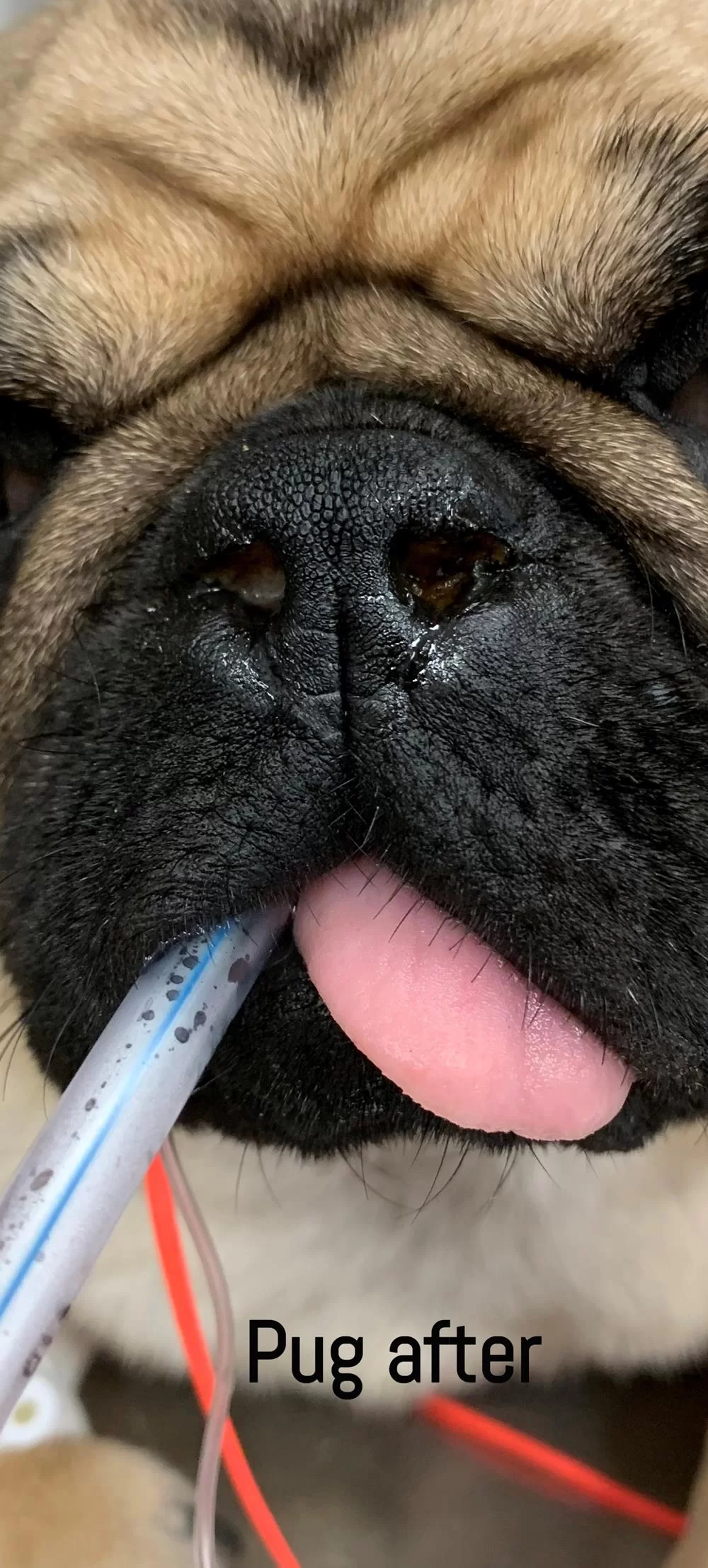
Our before and after photos show how much wider the nostrils become after stenotic nares surgery. Owners often notice quieter breathing, better sleep, more energy on walks, and improved tolerance to warm weather within weeks of recovery.
Brachycephalic Airway Syndrome FAQs
Which breeds are affected by brachycephalic airway syndrome?
English and French Bulldogs, Pugs, Boston Terriers, Shih Tzus, Pekingese, Boxers, Cavalier King Charles Spaniels, and Persian and Himalayan cats are among the most commonly affected breeds.
Is snoring normal for flat-faced breeds?
Snoring and snorting are common in these breeds, but they are not normal. They are signs that the airway is partially obstructed.
What is stenotic nares surgery?
Stenotic nares surgery widens narrow nostrils so air can move more easily through the nose. It is often combined with other airway corrections.
When should my pet have airway surgery?
Earlier is usually better, ideally before secondary changes such as laryngeal collapse develop. Many owners schedule it with their pet’s spay or neuter.
Are brachycephalic breeds at higher risk for heatstroke?
Yes. These pets cannot pant efficiently to cool themselves, so they are at high risk in hot, humid weather.
Is anesthesia riskier for brachycephalic pets?
These pets require extra care, which is why we use careful airway management, continuous monitoring, and close observation during recovery.
Does weight affect breathing in flat-faced breeds?
Yes. Extra weight adds pressure on the airway and chest, making breathing harder. Keeping your pet lean helps significantly.
Help Your Pet Breathe Easier
If your Bulldog, Pug, or other flat-faced pet struggles to breathe, call (903) 617-6072 to schedule an airway evaluation in Tyler.