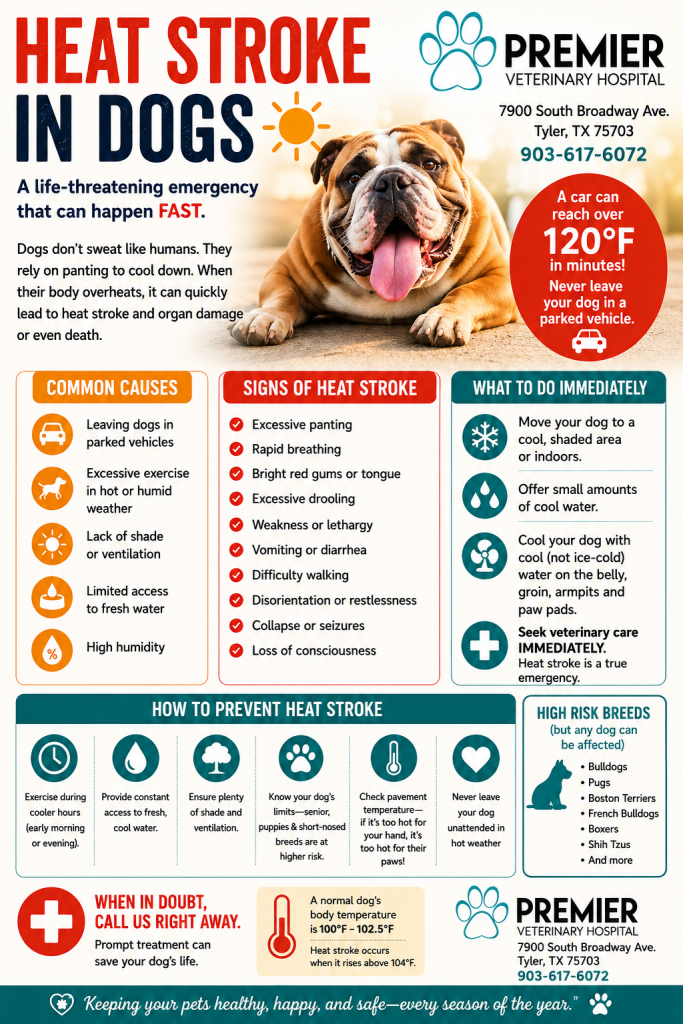
As temperatures rise, so does the risk of heat-related illness in our pets. Every summer, veterinary hospitals see dogs suffering from heat stroke, a medical emergency that can rapidly become fatal if not recognized and treated immediately.
Unlike people, dogs cannot effectively cool themselves through sweating. Instead, they rely primarily on panting to regulate body temperature. When temperatures become too high or a dog cannot cool down efficiently, dangerous overheating can occur.
Understanding the signs of heat stroke and knowing how to prevent it can save your dog’s life.
What Is Heat Stroke?
Heat stroke occurs when a dog’s body temperature rises to dangerous levels and exceeds its ability to cool itself. A normal canine body temperature ranges between 100°F and
102.5°F. Dogs experiencing heat stroke often have body temperatures exceeding 104°F, and severe cases may exceed 106°F.
At these temperatures, damage begins to occur throughout the body, affecting the brain, heart, lungs, kidneys, liver, and blood clotting system.
Without immediate veterinary care, heat stroke can quickly become fatal.
Dogs at Higher Risk
While any dog can develop heat stroke, some pets are especially vulnerable:
- Bulldogs
- Pugs
- Boston Terriers
- French Bulldogs
- Shih Tzus
- Boxers
- Overweight dogs
- Senior dogs
- Puppies
- Dogs with heart disease
- Dogs with respiratory disease
- Dogs with thick or heavy coats
Brachycephalic (short-nosed) breeds are particularly susceptible because their airway anatomy makes panting less effective.
Common Causes of Heat Stroke Leaving Dogs in Vehicles
Even on a mild day, temperatures inside a parked vehicle can become deadly within minutes. Cracking windows provides very little protection.
A car’s interior can exceed 120°F in a short period of time, even when outdoor temperatures are in the 70s or 80s.
Excessive Exercise
Running, hiking, playing fetch, or vigorous activity during hot weather can cause a dog’s body temperature to rise rapidly.
Lack of Shade or Water
Dogs left outdoors without access to shade and fresh water are at significant risk.
High Humidity
Humidity reduces the effectiveness of panting, making it harder for dogs to cool themselves.
Signs of Heat Stroke
Early recognition is critical. Watch for:
- Excessive panting
- Rapid breathing
- Bright red gums
- Excessive drooling
- Weakness
- Lethargy
- Vomiting
- Diarrhea
- Difficulty walking
- Disorientation
- Collapse
- Seizures
- Loss of consciousness
If your dog is showing any of these signs during hot weather, seek veterinary care immediately.
What To Do If You Suspect Heat Stroke
Heat stroke is a true emergency.
While arranging immediate transport to your veterinarian or emergency hospital:
Move Your Dog to a Cool Area
Bring your dog indoors or into shade immediately.
Begin Cooling
Use cool (not ice-cold) water on the body, especially:
- Belly
- Groin
- Paw pads
- Armpits
Use Fans
Fans help increase evaporative cooling.
Offer Small Amounts of Water
Allow your dog to drink if they are alert and able.
Avoid Ice Baths
Ice water can constrict blood vessels and may actually slow the cooling process.
Seek Veterinary Care Immediately
Even if your dog appears to improve, internal organ damage may still be occurring.
How Veterinarians Treat Heat Stroke
Treatment often includes:
- Intravenous fluids
- Oxygen therapy
- Active cooling measures
- Blood pressure monitoring
- Bloodwork to assess organ function
- Treatment for clotting abnormalities
- Hospitalization and intensive monitoring
Some complications may not appear for several hours after the initial event, which is why prompt medical evaluation is essential.
How to Prevent Heat Stroke
Prevention is always better than treatment. Never Leave Your Dog in a Parked Vehicle Not even for a few minutes.
Exercise During Cooler Hours
Walk dogs early in the morning or later in the evening.
Provide Constant Access to Water
Fresh, cool water should always be available.
Ensure Adequate Shade
Outdoor pets need shaded areas throughout the day.
Be Cautious with High-Risk Breeds
Short-nosed breeds should avoid strenuous activity during hot weather.
Watch Pavement Temperatures
If the pavement is too hot for your hand, it is too hot for your dog’s paws.
Know Your Dog’s Limits
Senior pets, overweight pets, and pets with medical conditions may overheat much faster than healthy adult dogs.
When to Call Your Veterinarian
If your dog is:
- Excessively panting
- Acting weak or lethargic
- Vomiting after heat exposure
- Having difficulty breathing
- Collapsing
- Showing any neurological signs
Do not wait to see if they improve on their own.
Heat stroke can progress rapidly and become life-threatening within minutes.
Final Thoughts
Heat stroke is one of the most preventable emergencies we see in veterinary medicine. By recognizing the warning signs, avoiding risky situations, and seeking immediate veterinary care when needed, you can help keep your dog safe throughout the hottest months of the year.
If you have questions about your pet’s risk factors or need immediate assistance, contact Premier Veterinary Hospital. Our team is here to help your pets stay healthy, safe, and comfortable all year long.
Premier Veterinary Hospital
7900 South Broadway Ave. Tyler, TX 75703
903-617-6072
Website: premierveterinaryhospital.com