
Most cat owners know their feline companions’ routines by heart—from their favorite nap spots to the sound of them running to the food bowl.
Because cats are creatures of habit, even subtle changes in behavior can be an important sign that something isn’t right.
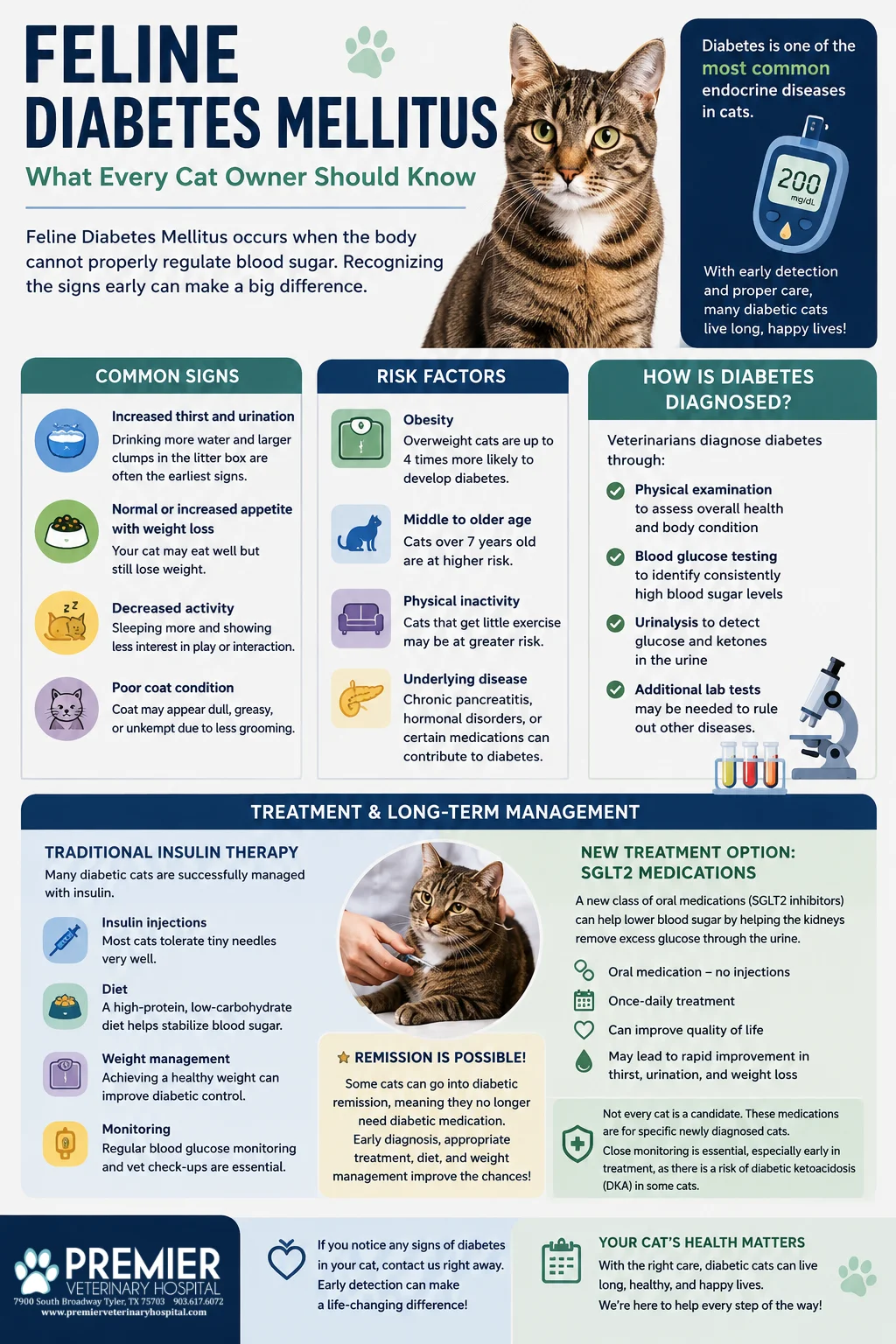
One condition that becomes increasingly common as cats age is Feline Diabetes Mellitus, a disease that affects the body’s ability to regulate blood sugar. Diabetes is one of the most frequently diagnosed endocrine disorders in cats, and early detection can make a significant difference in treatment success and long-term health.
The good news? With proper management, many diabetic cats live long, happy, and comfortable lives. Some cats may even achieve diabetic remission, meaning they no longer require diabetic medication.
Recognizing the Signs of Diabetes
The symptoms of diabetes often develop gradually, making them easy to miss in the early stages.
One of the most common signs is increased thirst and urination. You may notice yourself refilling the water bowl more often or finding larger-than-normal clumps in the litter box.
Another hallmark sign is weight loss despite a normal or increased appetite. Diabetic cats may seem hungry all the time while continuing to lose weight.
Many diabetic cats also experience decreased energy levels. A cat that once enjoyed playing, climbing, or interacting with family members may begin sleeping more and showing less interest in daily activities.
You may also notice a decline in coat quality. Cats with diabetes often groom themselves less effectively, resulting in a coat that appears dull, greasy, or unkempt.
If you observe any combination of these symptoms, scheduling a veterinary examination is important.
Which Cats Are at Risk?
While diabetes can occur in any cat, several factors increase the likelihood of developing the disease.
Obesity is one of the most significant risk factors. Overweight cats are substantially more likely to develop diabetes than cats maintained at a healthy body condition.
Age also plays a role. Diabetes is most commonly diagnosed in middle-aged and senior cats, particularly those over seven years of age.
Cats with limited physical activity may be at increased risk, as can cats with underlying medical conditions such as chronic pancreatitis, hormonal disorders, or certain medication exposures.
How Is Diabetes Diagnosed?
Because several diseases can produce symptoms similar to diabetes, a thorough diagnostic evaluation is essential.
Your veterinarian will perform a comprehensive physical examination and recommend diagnostic testing that typically includes:
- Blood glucose testing to identify persistently elevated blood sugar levels
- Urinalysis to detect glucose and ketones in the urine
- Additional laboratory testing to assess overall health and identify any concurrent medical conditions
These tests allow your veterinarian to confirm the diagnosis and develop the most appropriate treatment plan for your cat.
Treatment Options Have Expanded
For many years, insulin injections were the primary treatment option for feline diabetes. While insulin remains an excellent and life-saving therapy for many cats, recent advances in veterinary medicine have created additional treatment options for select patients.
Traditional Insulin Therapy
Many diabetic cats continue to be successfully managed with insulin therapy. Modern insulin needles are extremely small, and most cats tolerate injections remarkably well.
Treatment often includes:
- Insulin administration as prescribed
- A high-protein, low-carbohydrate diet
- Weight management when appropriate
- Regular blood glucose monitoring and veterinary follow-up visits
With consistent treatment and monitoring, many cats experience excellent diabetic control and an improved quality of life.
New Oral Medications for Diabetes
One of the most exciting developments in feline medicine is the introduction of a new class of medications called SGLT2 inhibitors.
These medications work differently than insulin. Rather than helping the body utilize glucose, they lower blood sugar by helping the kidneys remove excess glucose from the body through the urine.
For appropriately selected cats, these medications offer a convenient oral treatment option that eliminates the need for insulin injections.
Currently available options include medications such as Senvelgo® and Bexacat®.
Is Every Diabetic Cat a Candidate?
Not necessarily.
SGLT2 medications are approved for specific newly diagnosed diabetic cats and are not appropriate for every patient. Before starting treatment, veterinarians perform diagnostic testing to ensure the medication can be used safely.
Cats that are ill, have elevated ketones, or have certain underlying medical conditions may require insulin therapy instead.
Because diabetic ketoacidosis (DKA) remains a potential risk in some patients, close monitoring during the initial weeks of treatment is essential.
Can Cats Go Into Diabetic Remission?
One unique aspect of feline diabetes is that remission is possible.
When diabetes is diagnosed early and managed appropriately through medication, nutrition, weight control, and monitoring, some cats regain enough pancreatic function that they no longer require diabetic treatment.
While remission cannot be guaranteed, early intervention significantly improves the chances of achieving this outcome.
The Importance of Early Detection
Diabetes is a serious medical condition, but it is also one of the most manageable chronic diseases we see in cats. Advances in treatment—including both insulin therapy and newer oral medications—allow veterinarians to tailor treatment plans to the individual needs of each patient.
If you’ve noticed increased drinking, larger litter box clumps, unexplained weight loss, or changes in your cat’s energy level, don’t ignore these signs.
The sooner diabetes is diagnosed, the sooner treatment can begin—and the better the chances of helping your cat live a healthy, comfortable life.
If you have concerns about your cat’s health or would like to learn more about feline diabetes, contact Premier Veterinary Hospital. Our team is here to help you navigate every step of your cat’s care.